
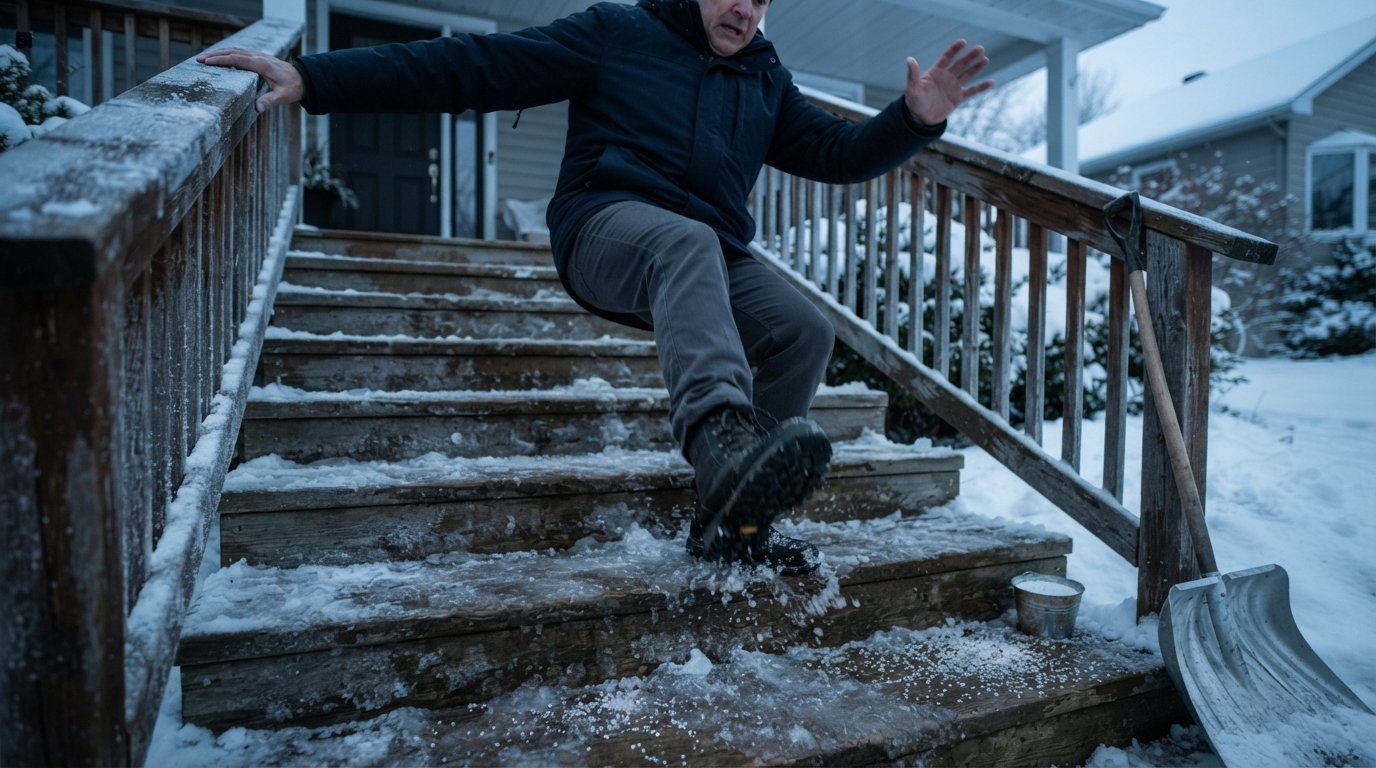
Can You Sue a Property Owner for a Fall on Icy Steps?
Can you sue a property owner for a fall on icy steps? Learn when negligence applies and how to protect your claim. Call (833)-349-4659 for a free case review.

By Orion Fletcher
You slip on a patch of ice on someone else's steps, and the world tilts: pain, embarrassment, and a swirl of questions. The most pressing one is often whether you have any legal recourse. The short answer is yes, you can sue a property owner for a fall on icy steps, but only if you can prove that the owner was negligent in some way. Not every winter slip becomes a lawsuit. Ice is a fact of life in cold climates, and the law does not require property owners to be perfect. It does, however, require them to act reasonably. This article walks you through the legal framework, the evidence you need, the local rules that can change the outcome, and the practical steps to take immediately after a fall. It also explains how a free legal resource like GoFreeLegal can help you understand your options without upfront cost.
Premises Liability Basics for Weather-Related Hazards
Premises liability is the area of law that holds property owners responsible for injuries that occur on their property due to unsafe conditions. In the context of icy steps, the core question is whether the owner breached a duty of care owed to you. The duty depends on your legal status on the property. If you were an invitee (a customer, for example), the owner owes the highest duty: to inspect for hazards and either fix them or warn you. If you were a licensee (a social guest), the duty is lower but still includes warning of known dangers. If you were a trespasser, the duty is minimal, though intentional harm or gross negligence can still create liability.
But winter weather complicates this analysis. Courts recognize that ice and snow are natural accumulations in many regions. In some states, a property owner is not liable for injuries caused by a natural accumulation of ice or snow unless there is an unusual circumstance, such as a hidden danger or a failure to remove it after a reasonable time. In other states, the owner has a duty to clear walkways within a specific timeframe after a storm. The key takeaway is that you cannot simply sue because you fell; you must show that the owner had a duty, breached it, and that the breach caused your injury.
For example, if a store owner shovels snow from the sidewalk but leaves a thick sheet of ice underneath, and you fall, the owner may be liable because they created or worsened the hazard by shoveling improperly. Conversely, if you slip on ice that formed overnight from freezing rain and the owner had no reasonable opportunity to clear it, a lawsuit may be difficult. The law balances the practicalities of winter against the safety of visitors.
Proving the Owner Knew or Should Have Known About the Ice
The central battleground in icy step cases is notice. You must prove that the property owner either knew about the icy condition or should have known about it through reasonable inspection. This is called constructive notice. For example, if the ice had been there for several days and was obvious to anyone who looked, a court may find that the owner should have known. If the owner had received complaints about the ice or had previously been cited for failing to clear snow, that strengthens your case.
Evidence is everything. After a fall, try to document the scene immediately. Take photographs of the icy steps from multiple angles, including close-ups of the ice and wider shots showing the surrounding area. Note the weather conditions, the time of day, and how long the ice appeared to have been there. If there were witnesses, get their contact information. Keep your footwear and clothing as evidence, and seek medical attention promptly. Medical records linking your injury to the fall are crucial.
Property owners often defend these cases by arguing that the ice was an open and obvious danger, meaning you should have seen it and avoided it. They may also claim that the ice was a natural accumulation and that they had no duty to remove it. To counter these defenses, you need to show that the ice was not obvious (perhaps it was covered by a thin layer of snow) or that the owner's own actions (like improper shoveling) created a trap. An experienced attorney can help you gather and present this evidence effectively.
Local Rules That Can Affect Winter Hazard Claims
Winter hazard laws vary dramatically from state to state and even from city to city. Some municipalities have ordinances that require property owners to clear snow and ice from sidewalks within a certain number of hours after a storm. If the owner violated such an ordinance, that violation can be used as evidence of negligence. In other jurisdictions, the law follows the "natural accumulation rule," which generally shields property owners from liability for injuries caused by natural accumulations of snow and ice on their property.
Comparative fault rules also come into play. If you were partly at fault for your fall, for example by wearing inappropriate footwear or ignoring a visible icy patch, your recovery may be reduced or barred. Some states follow pure comparative negligence, where your damages are reduced by your percentage of fault. Others follow modified comparative negligence, where you cannot recover if you are more than 50 percent at fault. A few states still follow contributory negligence, which bars recovery if you are at fault at all. Understanding your state's rules is essential before you decide whether to pursue a claim.
Additionally, some states have specific statutes that limit liability for winter sports or recreational activities, but these rarely apply to ordinary walkways. The best way to know your rights is to consult a local personal injury attorney who understands the nuances of your jurisdiction. If you are unsure where to start, our guide on can you sue for an injury at a friends house explains how social guest status can affect your claim, which is relevant if you fell on private residential steps.
Practical Steps to Take Immediately After the Fall
What you do in the minutes, hours, and days after a fall on icy steps can make or break your case. Your first priority is your health. Seek medical attention right away, even if you think you are fine. Some injuries, like concussions or hairline fractures, do not show symptoms immediately. A medical record created soon after the fall is strong evidence linking your injury to the accident.
Next, document the scene thoroughly. Use your phone to take photos and videos of the icy steps, the surrounding area, and your footwear. If there are witnesses, ask for their names and phone numbers. Report the fall to the property owner or manager if possible, and ask for a written incident report. Keep copies of everything. Do not post about the fall on social media, as insurance adjusters may use your posts against you.
Then, consider your legal options. You can pursue a claim on your own, but insurance companies and defense attorneys often have more resources. A personal injury attorney can evaluate your case, gather evidence, and negotiate with insurers. Many work on a contingency fee basis, meaning you pay nothing unless you win. If you are worried about costs, a service like FormsByLawyers can connect you with attorneys from its network who offer free case reviews. The platform uses a patented selection process to identify top attorneys, and you can request a no-obligation quote to see if you have a viable claim.
Here is a quick checklist to follow after a fall on icy steps:
- Seek medical attention immediately and keep all records.
- Photograph the icy area, your shoes, and any visible hazards.
- Collect witness names and contact information.
- Report the incident to the property owner and request a copy of any report.
- Do not admit fault or discuss the fall with insurance adjusters before speaking to a lawyer.
Following these steps preserves evidence and strengthens your position. Remember that deadlines, called statutes of limitations, apply to personal injury claims. In most states, you have two to three years from the date of the injury to file a lawsuit, but some states have shorter deadlines for claims against government entities. Missing the deadline can bar your claim forever, so act promptly.
When a Lawsuit Makes Sense and When It Does Not
Not every icy step fall warrants a lawsuit. If the ice was an obvious natural accumulation and the owner had no reasonable time to clear it, your case may be weak. Similarly, if you were trespassing or ignoring clear warnings, recovery may be barred. However, if the owner created the hazard (for example, by allowing a downspout to drain onto the steps and refreeze), or if the owner failed to clear ice after a reasonable time, you may have a strong claim. The severity of your injuries also matters. Minor bruises may not justify the cost of litigation, while serious injuries like fractures or head trauma can lead to significant damages.
Insurance companies often try to settle quickly for less than the claim is worth. Having an attorney levels the playing field. Attorneys can calculate the full value of your claim, including medical bills, lost wages, pain and suffering, and future care. They can also handle the paperwork and negotiations, allowing you to focus on recovery. If you prefer to explore your options without committing to a lawyer, you can use FormsByLawyers to request a free, confidential case review. The site is not a law firm and does not provide legal advice, but it can connect you with attorneys who do.
In conclusion, you can sue a property owner for a fall on icy steps, but success depends on proving negligence, notice, and causation. The law is complex and varies by location, so gathering evidence and seeking professional guidance early is critical. Whether you pursue a claim independently or with an attorney, understanding your rights and acting quickly can make all the difference. If you have been injured, take the steps outlined above and consider reaching out to a legal professional to evaluate your case.