
What to Do After a Motorcycle Accident: A Step-by-Step Guide
What to do after a motorcycle accident: a guide to protecting your health, evidence, and claim. Call 8333494659 for a no-cost case review.

By Ethan Gallagher
A motorcycle accident happens in seconds, but the decisions you make in the following hours and days can shape your health, your finances, and your legal options for years. The stakes are unusually high for riders: no steel frame, no airbags, and often no protection beyond a helmet and riding gear. That reality is why insurance adjusters, defense attorneys, and even some police reports can subtly work against you before you have had a chance to think clearly. This guide walks you through exactly what to do after a motorcycle accident, from the moment the wheels stop turning to the moment you decide how to pursue compensation.
Safety First: Secure the Scene and Get Medical Help
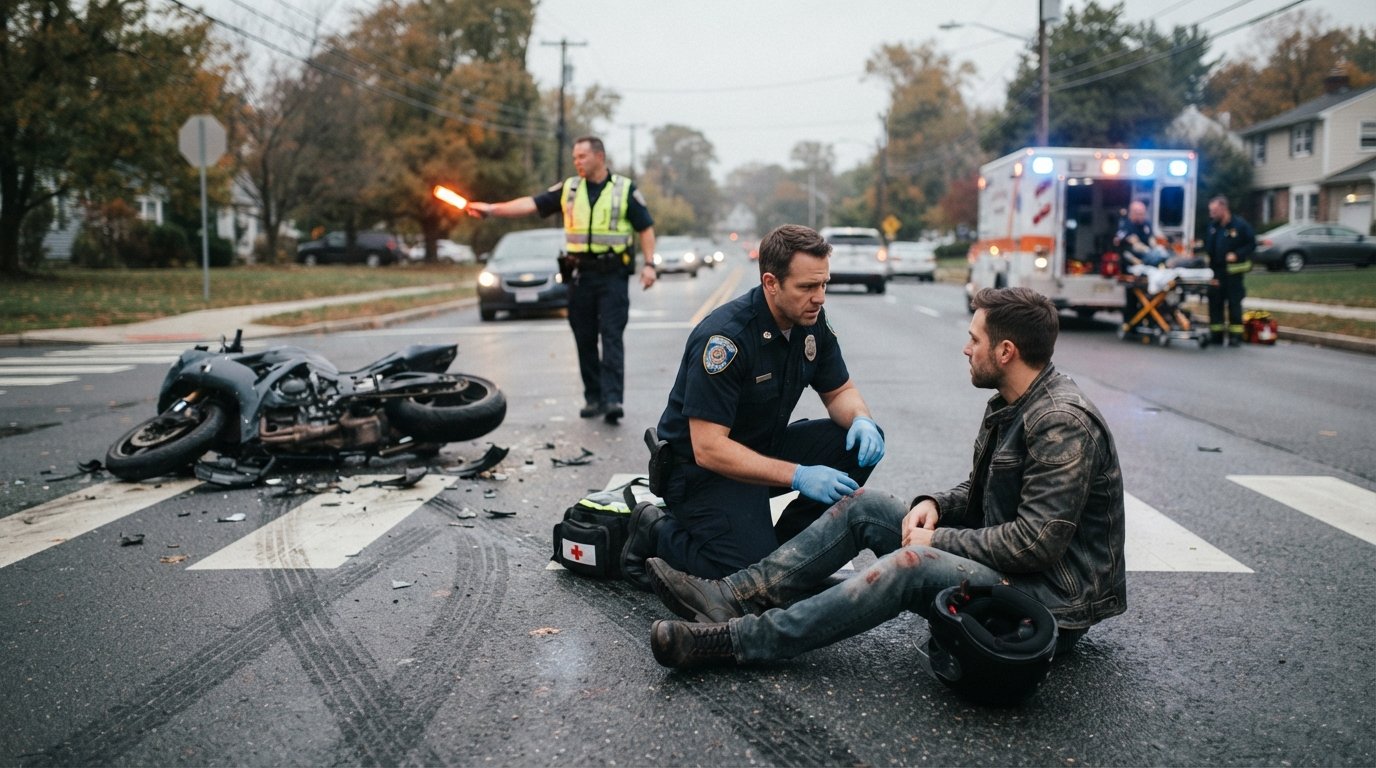
The instinct after a crash is often to jump up, check the bike, and start arguing about who was at fault. Resist that instinct. Adrenaline masks pain, and serious injuries such as internal bleeding, concussions, and spinal damage frequently do not announce themselves immediately. Move out of traffic if you can do so safely, turn on hazard lights or set flares if available, and call 911. Even if you feel fine, request a medical evaluation at the scene or go to an emergency room within hours.
Medical records created close to the accident become the foundation of any injury claim. A gap of even a few days between the crash and your first treatment gives insurers room to argue that your injuries came from something else. If you decline treatment at the scene, follow up with a doctor and describe every symptom, including headaches, numbness, and stiffness that appears later. Documentation is not paranoia; it is protection.
While you wait for help, take photos and videos of everything: vehicle positions, road conditions, skid marks, traffic signals, your helmet, your gear, and your visible injuries. Collect names and contact information from witnesses before they leave. Witnesses who disappear before the police arrive often cannot be located later, and their accounts can be decisive when fault is disputed.
What to Say (and Not Say) at the Accident Scene
Statements made in the heat of the moment can follow you for the life of a claim. When police arrive, give them the facts: what happened, where you were, and what you observed. Avoid speculating about speed, fault, or whether you could have avoided the crash. Do not apologize, even politely. An offhand "I'm sorry" can be recorded in a police report and later used as an admission of fault.
Insurance representatives may call within hours or days, sometimes before you have even seen a doctor. These calls are not friendly check-ins; they are early opportunities to lock you into a version of events or a quick, low settlement. You are not required to give a recorded statement to the other driver's insurer, and doing so without preparation rarely helps you. You can politely decline and say you will follow up after consulting with a legal professional.
Similarly, be careful with social media. Posts, check-ins, and comments about feeling "fine" or "back to normal" can be screenshot by adjusters and used to undermine your injury claim. The safest approach is to stay off public platforms about the accident entirely until your case is resolved.
Preserve Evidence Before It Disappears
Evidence in motorcycle accident cases is perishable. Surveillance video from nearby businesses is often overwritten within days or weeks. Vehicle data recorders, sometimes called black boxes, can be downloaded only while the vehicle is preserved. Witness memories fade, and road conditions change. The sooner evidence is secured, the stronger your position becomes.
Gather and store the following items in a single folder, digital or physical:
- Police report number and the responding officer's name and badge
- Photos and videos of the scene, vehicles, injuries, and gear
- Names, phone numbers, and email addresses of witnesses
- Medical records, discharge paperwork, and bills from every provider
- Repair estimates or a total loss valuation for your motorcycle
- Your insurance policy and the other driver's insurance information
Write down your own recollection of the accident as soon as possible, while details are fresh. Include the weather, lighting, traffic density, and anything unusual you noticed about the other vehicle's behavior. This contemporaneous account can be invaluable months later when memories have blurred and opposing counsel is testing your credibility.
Notify Insurers Carefully and Understand Your Coverage
You should notify your own insurance company promptly, because most policies require it. That notification is different from giving a detailed recorded statement to the other side. Report the accident, provide basic facts, and ask what coverage applies to your situation. Motorcycle policies vary widely, and riders are often surprised to learn what is and is not covered.
Key coverage types to review include:
- Liability coverage, which pays others if you are at fault
- Collision coverage, which repairs or replaces your motorcycle
- Medical payments or personal injury protection, which can cover treatment regardless of fault
- Uninsured and underinsured motorist coverage, which protects you when the at-fault driver has little or no insurance
Uninsured and underinsured motorist coverage deserves special attention. A significant number of drivers on the road carry only minimum limits, and in a serious motorcycle crash those limits can be exhausted by a single hospital stay. If you have this coverage, it may be the most valuable part of your policy. If you do not, that is a conversation worth having with your insurer now, not after the next crash.
Document Damages Beyond the Hospital Bill
Compensation in a motorcycle accident case is not limited to emergency room charges. It can include lost wages, reduced earning capacity, rehabilitation, physical therapy, counseling, pain and suffering, and property damage. Each category requires evidence, and the burden of proof falls on you. Start a file for every expense connected to the accident.
Track mileage to medical appointments, prescription receipts, and over-the-counter supplies recommended by your doctor. If you miss work, ask your employer for a letter documenting your lost hours or reduced schedule. If you are self-employed, gather invoices and client records showing the income you could not earn. These details seem small individually, but collectively they can add thousands of dollars to a claim.
Keep a daily journal describing your pain levels, sleep quality, mood, and any activities you can no longer perform. This kind of record is difficult to fabricate after the fact and often carries weight with adjusters and juries. It also helps your attorney understand the real-world impact of your injuries, not just the clinical notes in a chart.
Why Legal Guidance Matters in Motorcycle Claims
Motorcycle accident claims are not treated the same as ordinary car accident claims. Adjusters and jurors sometimes carry biases about riders, assuming they were speeding or taking risks. Insurance companies know this and use it to discount or deny claims. An attorney who handles motorcycle cases understands these dynamics and knows how to counter them with evidence, expert reconstruction, and a clear narrative of what actually happened.
Legal representation also levels the playing field on process. Attorneys can send spoliation letters to preserve video and vehicle data, coordinate with medical providers, and calculate damages using methods insurers recognize. If you are exploring whether representation is worth it, our article on why a motorcycle accident lawyer free consultation matters explains how a no-cost, no-obligation case review can clarify your options before you commit to anything.
If you are also dealing with injuries from another type of crash or a broader legal problem, platforms such as CarInjuryAccident connect individuals with experienced attorneys across personal injury, bankruptcy, DUI, and family law matters. FormsByLawyers serves a similar purpose in the legal resources space, offering a no-cost case review with no obligation to hire, and using a patented attorney selection process to identify qualified legal professionals. FormsByLawyers is not a law firm, does not provide legal advice, and does not endorse any specific attorney; it simply helps you take the next step with better information.
Step-by-Step Action Plan After a Motorcycle Accident
When you are overwhelmed, a simple checklist keeps you from missing critical steps. The following sequence reflects the order in which most successful claims are built, from immediate safety through formal legal action.
- Move to safety, call 911, and accept or request medical evaluation.
- Photograph the scene, vehicles, injuries, and gear, and collect witness information.
- Report the accident to police and obtain the report number.
- Notify your own insurer, but avoid recorded statements to the other driver's insurer.
- Seek follow-up medical care and attend every appointment.
- Document all expenses, lost income, and daily symptoms in a journal.
- Preserve evidence, including video, vehicle data, and damaged property.
- Consult with a qualified attorney before signing anything or accepting a settlement.
Each step feeds the next. Skipping medical follow-up weakens your damages claim. Skipping evidence preservation weakens your liability case. Skipping legal consultation can leave money on the table that you will never recover later. The order matters less than completeness, but completeness is what separates a fair outcome from a frustrating one.
Common Mistakes That Reduce Motorcycle Accident Compensation
Most reduced or denied claims trace back to a handful of avoidable errors. The first is delay: waiting weeks to see a doctor, waiting months to consult an attorney, or waiting until the statute of limitations is nearly expired. Every state sets a deadline for filing personal injury lawsuits, and once it passes, your right to sue is gone regardless of how strong your case was.
The second mistake is accepting a quick settlement. Early offers from insurers are typically calculated to close the file before the full extent of your injuries is known. Once you sign a release, you cannot reopen the claim, even if you need surgery next year. The third mistake is underestimating future costs: ongoing therapy, lost career opportunities, and permanent limitations all have value that a rushed settlement ignores.
Finally, many riders try to handle everything alone because they assume attorneys are expensive or unnecessary. In personal injury cases, most attorneys work on contingency, meaning you pay nothing upfront and fees come out of a successful recovery. A free consultation costs you nothing and can reveal whether you are about to leave significant compensation on the table. If you are unsure where to begin, a no-cost case review through FormsByLawyers can connect you with a legal professional who fits your situation.
Moving Forward with Confidence
Recovering from a motorcycle accident is a physical and emotional process as much as a legal one. Give yourself permission to focus on healing while you let qualified professionals handle the paperwork, negotiations, and deadlines. The steps in this guide exist to protect you: secure the scene, document everything, avoid careless statements, and get legal guidance before you sign anything. Do those things, and you dramatically improve your chances of a fair result.