
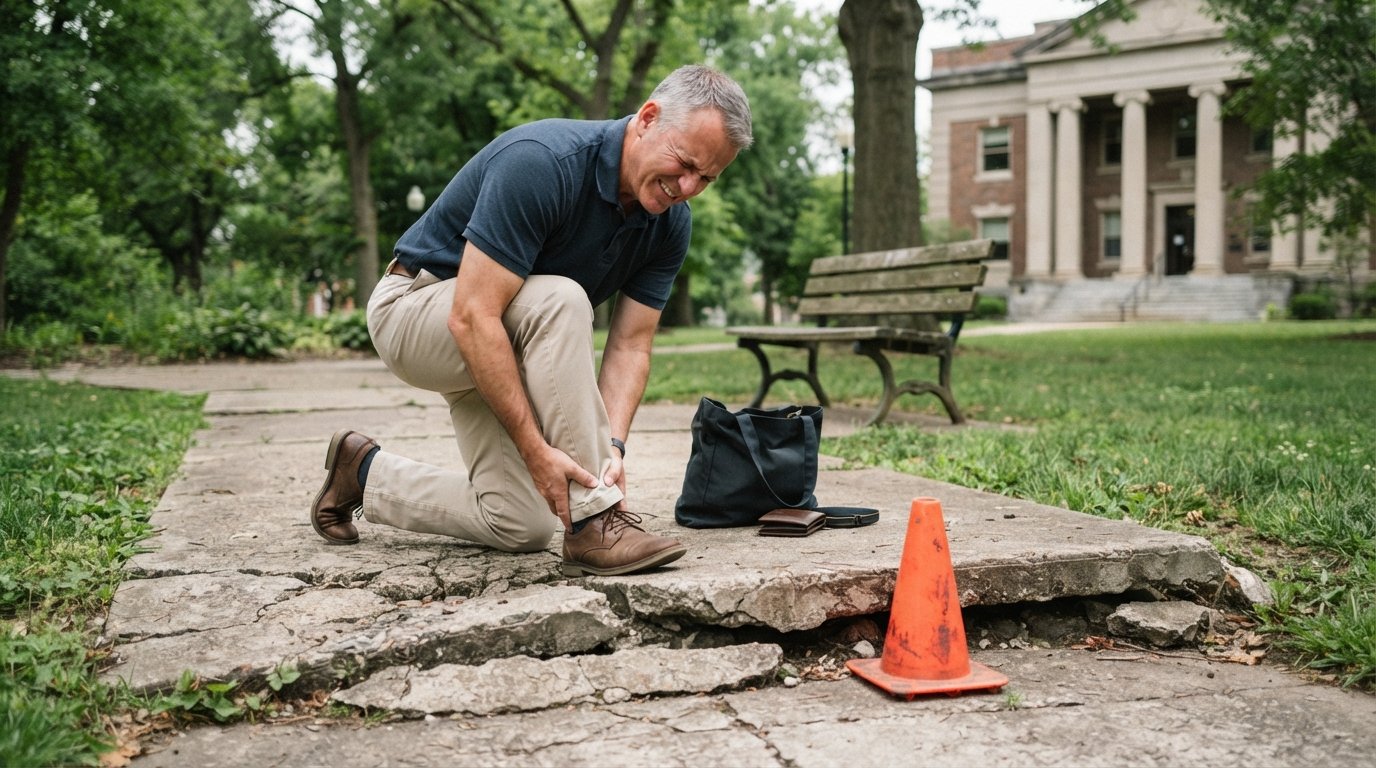
Injured in a Public Park or Government Building? Get Legal Help
Injured in a public park or government building? Call (833)-349-4659 to request a free case review and protect your claim before notice deadlines pass.

By Orion Fletcher
You slipped on a broken sidewalk in a city park, tripped on a loose stair in a county courthouse, or were assaulted in a poorly lit municipal parking garage. Now you face medical bills, lost wages, and a confusing question: can you even sue the government? The answer is often yes, but the path is far narrower and more deadline-driven than a typical slip-and-fall at a grocery store. This article explains how public property injury claims work, what you must prove, and how an injured in a public park or government building lawyer can help you avoid the procedural traps that sink most claims before they start.
Why Public Property Injuries Are Not Like Private Premises Claims
When you are hurt on private property, you generally rely on premises liability law: the owner owes you a duty of reasonable care, and if they breached that duty and you were injured, you can pursue a claim. Public property adds a thick layer of legal complexity. The government owns parks, schools, courthouses, libraries, transit stations, and administrative buildings, and it protects itself with doctrines that private landowners never get to use.
The most important is sovereign immunity. In simple terms, the government cannot be sued unless it consents to be sued. Every state and the federal government have enacted limited waivers of that immunity, usually called tort claims acts. These statutes allow some claims for negligence, but they carve out exceptions for things like discretionary functions, recreational activities, and certain dangerous conditions. A public park injury lawyer spends a great deal of time determining whether your specific facts fall inside or outside those exceptions.
There is also a practical difference in how notice works. A private business may learn about a spill through an employee and fix it. A city might not know about a cracked path until someone reports it. That means your case often turns on whether the government had actual or constructive notice of the hazard and a reasonable opportunity to repair it. Proving notice may require public records requests, maintenance logs, and 311 complaint histories, which is one reason these cases benefit from early legal involvement.
Government Notice-of-Claim Deadlines: Shorter and Unforgiving
If you are injured on public property, you usually cannot file a lawsuit immediately. Most jurisdictions require you to file a formal notice of claim with the appropriate government entity within a short window, often 60 to 180 days from the date of injury. Some states allow as little as 30 days for certain municipalities. Miss that deadline and your claim may be barred entirely, no matter how strong the facts are.
The notice itself is not a simple letter. It typically must include the date, time, and location of the incident, a description of the dangerous condition, the injuries you suffered, and the amount of damages you seek. It must be delivered to the correct office, whether that is the city clerk, the county risk manager, the state attorney general, or a specific school district. Sending it to the wrong place can be treated as no notice at all.
After the notice is filed, there is usually a waiting period before you can sue, giving the government time to investigate or settle. The entire sequence means that a public park injury claim moves on a different clock than a private claim. An injured in a public park or government building lawyer will calendar every deadline, prepare the notice correctly, and preserve your right to proceed.
Sovereign Immunity Exceptions for Parks, Schools, and Municipal Buildings
Not every public injury is compensable. Understanding the exceptions helps you evaluate whether you have a claim worth pursuing. The following are common categories where immunity may be waived, depending on your state:
- Dangerous conditions on public property: Many tort claims acts waive immunity for a known dangerous condition, such as a crumbling staircase, a broken playground surface, or a missing handrail, if the government had notice and failed to act.
- Negligent maintenance of public buildings: Leaks, uneven flooring, burned-out lighting in stairwells, and similar maintenance failures often fall within a waiver for proprietary or ministerial functions.
- Recreational areas with willful or malicious failure to warn: Some states provide limited protection for parks and trails but still allow claims when the government intentionally fails to warn of a hidden hazard.
- School and municipal building injuries: Slips in a school hallway, falls in a city hall lobby, or injuries in a public library may be covered if the condition was foreseeable and the entity had a duty to maintain safe premises.
On the other side, immunity often remains for discretionary decisions like how to design a park, where to place signs, or how many police officers to assign to an event. These are policy choices, not maintenance failures, and courts generally will not second-guess them. A government building injury attorney can help you frame your facts around the maintenance and notice theories that courts accept rather than the discretionary decisions they reject.
Evidence to Collect on Site and Through Public Records Requests
What you do in the hours and days after the injury can determine whether your claim survives. If you are able, document the scene thoroughly. Take photographs and video of the hazard from multiple angles, including wide shots that show the surrounding area and close-ups that show the defect. Note lighting, weather, and whether any warning cones or signs were present. Get the names and contact information of witnesses and ask whether security cameras might have captured the incident.
Then move to public records. Government entities maintain inspection reports, work orders, maintenance schedules, incident logs, and complaint databases. A public records request can reveal whether the city knew about the broken pavement before you fell or whether the school had received prior complaints about a loose railing. These records are often the difference between a demand letter that gets ignored and one that produces a serious settlement offer.
Because evidence can disappear quickly (surveillance footage is often overwritten within days or weeks, and repairs erase the hazard), it is wise to involve counsel early. If you are also dealing with a head injury from a fall, resources like a lawyer for brain trauma injury claims can explain how to document cognitive symptoms and link them to the incident. For broader accident and injury matters, platforms such as CarInjuryAccident connect injured people with attorneys who handle these complex claims.
How an Injured in a Public Park or Government Building Lawyer Builds Your Case
A lawyer handling a claim against a government entity does more than fill out forms. The work begins with a prompt investigation: identifying the correct defendant or defendants, determining which immunity waivers apply, and gathering evidence before it vanishes. From there, counsel prepares and serves the notice of claim, manages the waiting period, and negotiates with government claims adjusters who handle these cases every day.
If the claim does not resolve, litigation follows. Suing a municipality or agency involves specific procedural rules, including requirements for expert testimony on dangerous conditions and standards of care. A skilled attorney will retain engineers, safety experts, and medical professionals to prove both liability and the full extent of your damages, from emergency treatment to future rehabilitation.
Many people hesitate because they worry about cost. Most personal injury attorneys work on contingency, meaning you pay nothing upfront and the attorney receives a percentage of any recovery. That structure aligns incentives: your lawyer only gets paid if you do. When you are comparing options, ask about experience with government entities specifically, because a lawyer who only handles private premises cases may not know the notice deadlines and immunity defenses that govern public property claims.
Requesting a Free Case Review Through FormsByLawyers
If you were hurt in a park, school, courthouse, or other government building, the next step is to get a clear assessment of your options. FormsByLawyers is a legal resources platform that connects individuals with third-party legal professionals, including attorneys experienced in public property injury claims. The platform uses a patented attorney selection process that identifies the top five percent of attorneys annually based on peer influence and research, and it offers quick quotes and customized quotes so you can understand your situation before committing to anything.
Requesting a review is free, confidential, and carries no obligation to hire. You can describe what happened, upload photos or documents if you have them, and receive a response from a qualified attorney. FormsByLawyers is not a law firm and does not provide legal advice, but it can connect you with counsel who does. Given how quickly notice deadlines run, starting the conversation now is far better than waiting until the window closes.
The bottom line: public property injuries are recoverable, but only if you move quickly and follow the rules that apply to government defendants. Document the scene, preserve evidence, and get a lawyer who understands sovereign immunity and notice-of-claim statutes. With the right help, you can pursue the compensation you deserve while the government plays by its own strict timetable.