
How to Document an Accident Scene for a Personal Injury Case
How to document an accident scene for a personal injury case: gather photos, witness info, and police reports to strengthen your claim and pressure insurers.

By Dashiell Crowe
A screech of tires, a sudden impact, and then silence. In the chaotic moments after an accident, your mind races with questions: Is everyone okay? What just happened? What do I do now? Amid the shock and adrenaline, one critical task often gets overlooked: documenting the accident scene. This step, done thoroughly and correctly, can be the difference between a successful personal injury claim and a frustrating battle with insurance adjusters. If you are wondering how to document an accident scene for a personal injury case, the actions you take in the first hours and days can significantly impact the strength of your claim. This guide will walk you through the essential steps to gather evidence, protect your rights, and build a solid foundation for your case. For those facing serious legal challenges, platforms like CarInjuryAccident offer connections to seasoned attorneys, but your own documentation efforts remain crucial from the very beginning.
Why Prompt and Thorough Documentation Matters
Insurance companies are businesses. Their goal is to minimize payouts, and they will scrutinize every detail of your claim. Without solid evidence, they may dispute liability, downplay the severity of your injuries, or offer a settlement that falls far short of covering your losses. Proper documentation serves as your voice when memories fade and details become hazy. It provides objective proof of what happened, who was involved, and the extent of the damage.
In a personal injury case, the burden of proof generally rests on the injured party. You must demonstrate that another party's negligence caused the accident and your resulting injuries. Evidence collected at the scene, such as photographs, witness statements, and police reports, is powerful because it is immediate and unbiased. Conversely, a lack of documentation can leave gaps in your story, giving the other side room to argue that the accident occurred differently or that your injuries are not as serious as you claim.
Moreover, timely documentation can help identify witnesses before they disappear and preserve physical evidence that might be cleaned up or repaired. It also helps establish a clear timeline, which is often critical in determining fault. As you navigate the complexities of a personal injury claim, remember that a well-documented case is a strong case. If you're dealing with fall-related injuries, you might find additional guidance in resources like Why You Need an Experienced Personal Injury Lawyer for Fall Cases.
Steps to Take Immediately After an Accident
The moments right after an accident are stressful, but your actions can set the stage for a successful claim. First and foremost, ensure your safety and the safety of others. Move to a safe location if possible, call 911, and seek medical attention for anyone who is injured. Even if you feel fine, it's wise to get checked out by a medical professional, as some injuries, like whiplash or concussions, may not show symptoms immediately.
Once everyone is safe, it's time to start documenting. If you are physically able, begin gathering information. If not, ask a trusted passenger or bystander to help. The key is to be systematic and thorough. Here are the essential steps to follow at the scene:
- Call the police: A police report is an official record of the accident. Even for minor collisions, having law enforcement on the scene can provide an unbiased account and help with insurance claims. Obtain the responding officer's name, badge number, and the report number.
- Exchange information: Get the other driver's name, contact information, insurance company, policy number, driver's license number, and license plate number. Also, collect contact details from any witnesses.
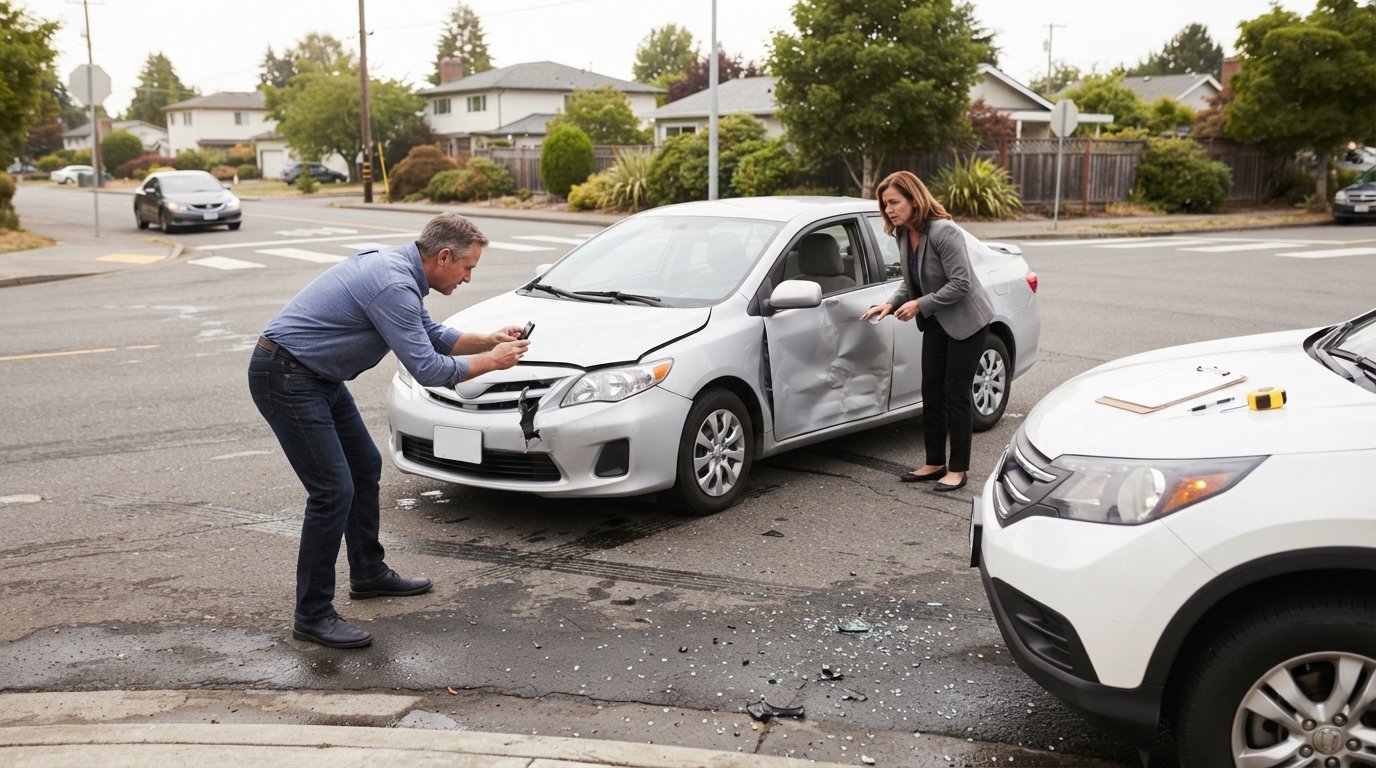
- Take photographs and videos: Use your smartphone to capture images from multiple angles. Photograph the overall scene, vehicle damage (close-ups and wide shots), skid marks, traffic signals, road conditions, and any visible injuries. If there are security cameras nearby, note their location.
- Document the environment: Note the date, time, weather conditions, and lighting. These factors can influence liability. For example, if the sun was in the other driver's eyes, it might be a contributing factor.
- Record statements: If the other driver admits fault, write it down or record it (if legal in your state). Avoid discussing fault yourself; just stick to facts. Ask witnesses what they saw and get their statements in writing if possible.
After completing these steps, seek medical attention if you haven't already. Follow your doctor's advice and keep all medical records. These records are vital for linking your injuries to the accident.
What Evidence to Collect at the Scene
Evidence comes in many forms, and each piece contributes to the overall picture. At the scene, focus on gathering both visual and written evidence. Photographs are often the most compelling because they provide an objective record. Take wide shots to show the layout of the intersection or road, and close-ups to show damage and debris. Don't forget to photograph the position of the vehicles before they are moved, if it's safe to do so. Also, capture images of any injuries, such as bruises, cuts, or swelling, as these can change over time.
Witness information is equally important. Get the names, phone numbers, and email addresses of anyone who saw the accident. A neutral witness can corroborate your version of events. If a witness is unwilling to provide a statement, note their license plate or other identifying details. Additionally, collect any physical evidence you can, like pieces of broken glass or car parts, but only if it's safe and legal to do so. In some cases, dashcam or surveillance footage can be invaluable, so ask nearby businesses or homeowners if they have cameras that might have captured the incident.
It's also a good idea to keep a detailed journal of everything that happens after the accident. Write down your recollections, pain levels, medical appointments, and any conversations with insurance adjusters. This contemporaneous record can be powerful evidence if your case goes to court. Remember, the more comprehensive your documentation, the better equipped you will be to prove your case.
Organizing Your Documentation for Your Attorney
Once you have gathered all this information, it's essential to organize it in a way that is easy for your attorney to review. Create a file, either physical or digital, and categorize your evidence. For example, you might have sections for photographs, witness statements, police reports, medical records, and correspondence with insurance companies. Label each item with the date and a brief description. This organization will save your attorney time and help them build a stronger case on your behalf.
When you meet with a personal injury lawyer, bring all your documentation. They will use it to assess the merits of your claim and determine the best course of action. Even if you haven't hired an attorney yet, having a well-organized file demonstrates your diligence and can make a positive impression during consultations. Many law firms, including those in the FormsByLawyers network, offer free case reviews, so you can get professional guidance without upfront cost. FormsByLawyers is not a law firm and does not provide legal advice, but it connects you with top-rated attorneys who can evaluate your case.
In addition to organizing your evidence, consider creating a timeline of events. This helps establish a clear sequence and highlights any inconsistencies in the other party's story. Your attorney will appreciate this effort and may use it to negotiate with insurers or present your case in court. Ultimately, your goal is to make it as easy as possible for your legal team to advocate for you.
Common Mistakes to Avoid During Documentation
Even with the best intentions, people often make mistakes when documenting an accident scene. One of the most common errors is failing to call the police. Without an official report, it becomes your word against the other driver's, which can weaken your claim. Another mistake is not seeking immediate medical attention. Insurance companies may argue that your injuries were not serious or were caused by something else if you delay treatment.
Apologizing or admitting fault is another pitfall. Even a simple "I'm sorry" can be interpreted as an admission of guilt and used against you. Stick to the facts and avoid speculating about who was at fault. Similarly, don't post about the accident on social media. Insurance adjusters often monitor social media profiles to find evidence that contradicts your claim. Keep your posts private and refrain from discussing the incident online.
Finally, don't wait too long to document the scene. Memories fade, witnesses move away, and evidence disappears. The sooner you gather information, the more reliable it will be. If you're unable to document at the scene due to injuries, ask someone you trust to do it for you, or return to the scene as soon as possible to take photographs and notes. Remember, the strength of your personal injury case often hinges on the quality of your documentation. If you need help connecting with a qualified attorney, consider using a service like FormsByLawyers to find legal professionals who can guide you through the process.
Documenting an accident scene is not just a good idea; it's a critical step in protecting your rights and securing fair compensation. By following these steps, you can build a strong evidentiary foundation that supports your personal injury claim. If you're ever in an accident, remember to stay calm, be thorough, and seek legal guidance when needed. Your diligence today can make all the difference in your recovery tomorrow.