
DUI Field Sobriety Tests: Accuracy and Common Challenges
DUI field sobriety tests accuracy and common challenges can shape your case. Call (833)-349-4659 to explore your legal options today.

By Harrison Cooper
You are driving home after a single drink with dinner when red and blue lights flash in your rearview mirror. The officer approaches, asks a few questions, and then requests that you step out of the vehicle. What happens next could shape the outcome of a DUI charge, your license, your finances, and even your freedom. Field sobriety tests are the centerpiece of that roadside encounter, yet most people have no idea how they work, how accurate they really are, or how often they produce misleading results. Understanding DUI field sobriety tests accuracy and common challenges is essential whether you are facing charges, researching your rights, or simply trying to make sense of a confusing legal process.
What Are Standardized Field Sobriety Tests?
Standardized field sobriety tests (SFSTs) are a battery of physical and cognitive exercises that police officers use to estimate whether a driver is impaired. The National Highway Traffic Safety Administration (NHTSA) developed and validated three tests that form the standard battery used across the United States. These are the horizontal gaze nystagmus test, the walk and turn test, and the one leg stand test. Officers are trained to administer them in a specific sequence under specific conditions, and they are supposed to score them according to standardized clues.
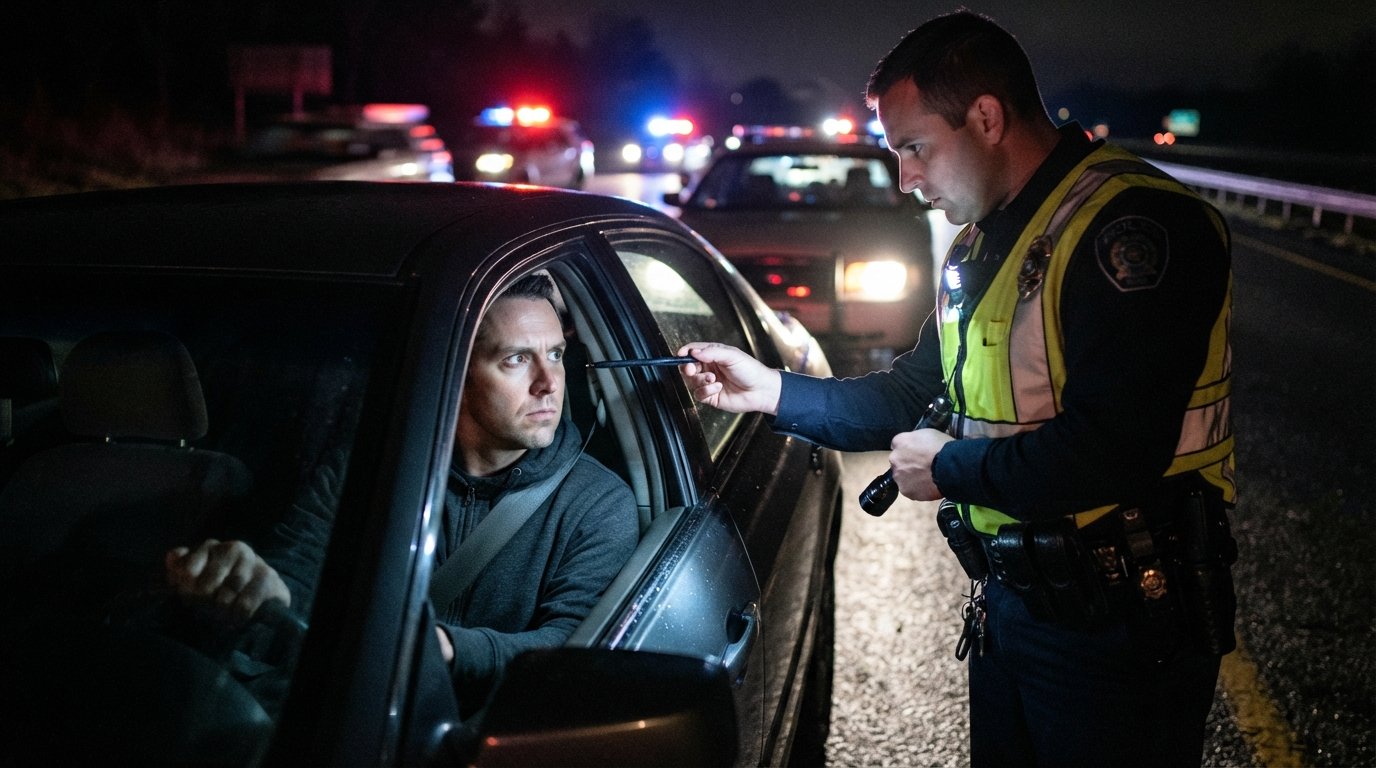
The horizontal gaze nystagmus test involves an officer moving a small object, such as a pen or a fingertip, horizontally in front of a driver's eyes while asking the driver to follow it without moving their head. Nystagmus is an involuntary jerking of the eyeball, and the test looks for exaggerated jerking at certain angles. The walk and turn test requires a driver to take nine heel to toe steps along a straight line, turn, and return in the same manner while listening to and remembering instructions. The one leg stand test asks a driver to raise one foot about six inches off the ground, keep their arms at their sides, and count out loud for approximately thirty seconds.
Beyond these three standardized tests, officers sometimes use non standardized exercises such as reciting the alphabet backwards, counting backwards, or touching a finger to the nose. These additional tests are not part of the validated battery and generally carry less scientific weight, though they can still influence an officer's impression and appear in a police report. In practice, the standardized three are the tests that prosecutors and defense attorneys focus on most, because their reliability has been studied and their limitations are documented.
The Science Behind DUI Field Sobriety Tests Accuracy and Common Challenges
The accuracy of field sobriety tests is a subject of ongoing debate in courts, research journals, and legal practice. NHTSA funded studies in the 1970s and 1980s that established baseline accuracy rates for the standardized battery when administered under ideal conditions. Those studies reported that the horizontal gaze nystagmus test could correctly identify impairment in roughly seventy seven percent of cases, the walk and turn test in roughly sixty eight percent, and the one leg stand in roughly sixty five percent. When officers combined the results of multiple tests, accuracy improved, but even the combined estimates left significant room for error.
Those accuracy figures came from controlled research settings with trained observers, cooperative subjects, and carefully managed conditions. Real world roadside encounters are far messier. Officers must make split second judgments in the dark, on uneven pavement, with traffic passing, in bad weather, and with drivers who may be nervous, fatigued, injured, or simply unfamiliar with the tests. Each of these variables can introduce error, and courts have increasingly scrutinized how field sobriety tests are administered and scored.
It is also important to recognize what field sobriety tests are designed to measure. They are not breath tests or blood tests, and they do not directly measure blood alcohol concentration. Instead, they rely on an officer's subjective interpretation of physical and cognitive cues. That subjectivity is the heart of many challenges raised in DUI cases, because two officers watching the same performance might score it differently. When a test depends on human observation rather than a calibrated instrument, questions about training, bias, and consistency become central to the legal analysis.
Another layer of complexity involves the relationship between impairment and alcohol concentration. A driver can show impairment at a lower blood alcohol level than the legal limit, and a driver can perform well on field sobriety tests despite being above the legal limit. Factors such as tolerance, sleep deprivation, medication, and medical conditions can all affect performance in ways that have nothing to do with alcohol. This is why defense attorneys often argue that field sobriety tests are an imperfect screening tool rather than a definitive measure of intoxication.
Common Challenges That Undermine Field Sobriety Test Reliability
Even when officers follow their training, a long list of practical and environmental factors can undermine the reliability of field sobriety tests. These challenges form the backbone of many DUI defenses, and they illustrate why a single roadside performance should not be treated as conclusive proof of guilt. Understanding these issues can help drivers, families, and legal researchers evaluate what really happened during a stop.
Some of the most frequently cited problems include the following:
- Improper administration, such as giving confusing instructions, demonstrating the test incorrectly, or rushing through the required steps
- Environmental conditions, including uneven pavement, poor lighting, inclement weather, and distracting traffic or flashing lights
- Physical and medical limitations, such as inner ear disorders, back or knee injuries, obesity, neurological conditions, and age related balance problems
- Psychological factors, including anxiety, fear of arrest, and the stress of being watched by an armed officer
- Officer bias and subjective scoring, where ambiguous cues are interpreted in a way that supports an arrest
Each of these issues can create reasonable doubt about whether a driver was actually impaired. For example, a person with a prior knee injury may struggle with the walk and turn test for reasons unrelated to alcohol. A driver stopped on a gravel shoulder may wobble during the one leg stand because the ground itself is unstable. An officer who speaks quickly or uses complex language may cause a sober driver to appear confused. Courts and defense attorneys have long recognized that these factors can produce false positives.
There is also the question of how officers document test performance. Body cameras, dash cameras, and written reports are supposed to capture what happened, but footage is sometimes missing, incomplete, or unclear. Reports often rely on checklists and shorthand that may not reflect the full context of the encounter. When records are thin or inconsistent, challenging the accuracy of field sobriety tests becomes both more difficult and more important. An experienced attorney can review the available evidence, compare it with the officer's account, and identify gaps that could affect the outcome of a case.
How Field Sobriety Tests Fit Into a DUI Investigation
Field sobriety tests are usually one part of a larger DUI investigation that begins the moment an officer observes a driving pattern or responds to a call. Before asking a driver to step out of the car, an officer typically looks for signs such as erratic lane use, speeding, delayed reactions at traffic signals, or equipment violations. During the initial conversation, the officer may note the smell of alcohol, slurred speech, bloodshot eyes, or admission of drinking. Field sobriety tests are then used to build additional evidence of impairment.
If the officer concludes that the driver is impaired, the next step is often a chemical test, such as a breath or blood test, to measure blood alcohol concentration. In many jurisdictions, drivers are subject to implied consent laws, meaning that refusing a chemical test can lead to automatic license suspension and other consequences. The interplay between field sobriety tests, chemical tests, and implied consent rules varies by state, which is why DUI law is often described as highly jurisdiction specific. What happens in one state may not match the procedure in another.
For drivers facing charges, this sequence matters because each stage creates opportunities to challenge the evidence. If the initial stop was unlawful, evidence gathered afterward may be suppressed. If the field sobriety tests were administered improperly, their results may be excluded or given little weight. If the chemical test was flawed or the chain of custody was broken, the prosecution's case may weaken. A defense attorney who understands DUI field sobriety tests accuracy and common challenges can evaluate these issues and advise on the strongest available strategy.
What to Do If You Are Stopped and Asked to Perform Field Sobriety Tests
Knowing your rights and responsibilities before a stop occurs can reduce panic and help you make clearer decisions. Laws differ from state to state, so it is always wise to consult a licensed attorney in your jurisdiction for advice specific to your situation. That said, several general principles apply in many places.
A calm, polite demeanor can help de escalate the encounter, even if you are frustrated or frightened. You are generally not required to perform field sobriety tests in many jurisdictions, though refusing may have consequences, and some states treat refusal as evidence of impairment. You may also have the right to consult an attorney before deciding whether to submit to a chemical test, depending on local rules. Documenting what happened as soon as possible, including the location, time, weather, and any statements made, can be valuable later.
If charges follow, gathering information about the officer's training, the administration of the tests, and any available video or audio recordings becomes a priority. This is where professional legal guidance can make a meaningful difference. Platforms such as AttorneyLawsuit provide resources for consumers researching legal disputes and attorney related issues, which can complement the work of a DUI defense lawyer. Resources like FormsByLawyers can also help drivers understand how to request a free, no obligation case review and connect with a qualified attorney in their area. FormsByLawyers is not a law firm and does not provide legal advice, but it can serve as a starting point for finding representation.
When evaluating a DUI charge, consider the following steps as a general framework:
- Write down everything you remember about the stop while it is fresh, including instructions given and tests performed.
- Request and preserve any body camera or dash camera footage through your attorney.
- Gather medical records that document injuries or conditions that could affect balance or coordination.
- Review the officer's report for inconsistencies, missing details, or signs of improper administration.
- Consult a DUI defense attorney licensed in your state to assess the strength of the evidence and your options.
These steps do not guarantee a particular result, and outcomes depend heavily on the facts and the law in your jurisdiction. However, they can help level the playing field and ensure that challenges to field sobriety test accuracy are properly raised.
Reforms and Ongoing Debate Around Field Sobriety Testing
Calls to reform or replace field sobriety tests have grown louder in recent years. Critics point out that the tests were validated decades ago under narrow conditions and have not kept pace with changes in vehicle technology, drug impairment patterns, and our understanding of human factors. Some researchers argue that the tests are better at detecting gross impairment than subtle impairment, and that they perform poorly when drivers are impaired by substances other than alcohol, such as cannabis, prescription medications, or stimulants.
In response, some jurisdictions have explored alternative approaches, including roadside breath screening devices, drug recognition expert programs, and standardized assessments that incorporate additional data. None of these alternatives has eliminated the controversy. Breath screening devices can have calibration and accuracy issues of their own, and drug recognition evaluations remain subjective and dependent on officer training. As a result, field sobriety tests continue to occupy a central role in DUI enforcement, even as their limitations are widely acknowledged.
For anyone navigating a DUI charge, the practical takeaway is that field sobriety tests are evidence, not verdicts. They can be challenged, contextualized, and in some cases excluded. Their accuracy depends on a long chain of conditions, from the officer's training to the driver's health to the environment at the roadside. Understanding DUI field sobriety tests accuracy and common challenges empowers drivers to ask better questions, seek qualified counsel, and avoid assuming that a roadside performance tells the whole story.
No two DUI cases are identical, and the law in your state may differ in important ways from the general principles discussed here. If you or someone you care about is facing a DUI charge, taking the time to learn about field sobriety testing and to consult a licensed attorney can help you make informed decisions during a stressful and high stakes process.