
Construction Site Accident Claim: Who Can Be Held Responsible?
Construction site accident claim who can be held responsible: identify liable parties, gather evidence, and pursue fair compensation with expert legal help.

By Tobin Hawke
A construction site is one of the most dangerous places to work or even to pass by. When an accident happens, the first question is often: who is to blame? The answer is rarely simple. A construction site accident claim who can be held responsible depends on a web of contracts, safety rules, and the specific facts of the incident. Multiple parties may share liability, from the general contractor to subcontractors, property owners, equipment manufacturers, and even other workers. Understanding these relationships is critical to building a successful claim and securing fair compensation. This article breaks down the key parties, the evidence you need, and how workers' compensation interacts with third-party lawsuits.
Multiple Parties That May Share Responsibility
Construction projects involve layers of responsibility. The general contractor oversees the entire project, but subcontractors perform specialized tasks. Property owners may control the site, and manufacturers supply equipment and materials. When an accident occurs, several parties could be liable depending on their role and level of control. Identifying all potential defendants is essential because each may have different insurance coverage and legal defenses.
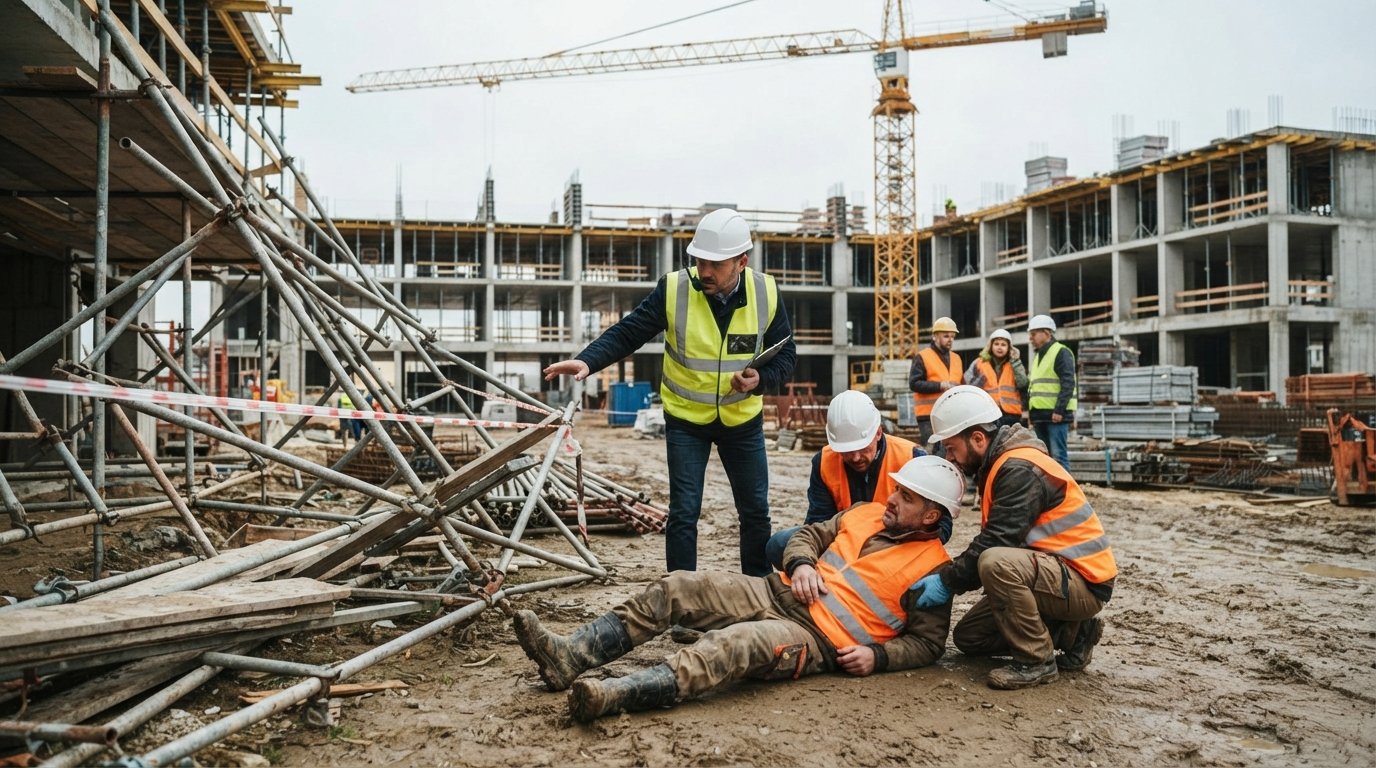
For example, if a worker falls from a scaffold, the general contractor might be liable for failing to enforce safety protocols, the scaffolding subcontractor for improper assembly, the property owner for hazardous site conditions, and the manufacturer for a defective component. An experienced attorney will investigate contracts, safety records, and witness statements to determine who bears responsibility.
- General contractor: Responsible for overall site safety, coordination, and compliance with OSHA regulations. May be liable for negligent supervision or hiring.
- Subcontractors: Directly responsible for their workers and specific tasks. Liability can arise from negligent work, failure to follow safety plans, or defective workmanship.
- Property owner: May be liable for unsafe premises conditions, especially if they retained control over the site or failed to warn of known hazards.
- Equipment manufacturers: If a defective tool or machine caused the accident, the manufacturer could be held strictly liable for design or manufacturing defects.
- Other workers: In some cases, a fellow worker's negligence may lead to liability, though workers' compensation usually limits lawsuits against employers and co-workers.
Each party's liability depends on legal doctrines such as negligence, premises liability, and product liability. Proving negligence requires showing a duty of care, a breach of that duty, causation, and damages. An attorney can help you navigate these complex legal theories and hold all responsible parties accountable.
How Workers' Compensation Interacts with Third-Party Claims
If you are an injured construction worker, you likely have a workers' compensation claim. Workers' comp provides medical benefits and wage replacement without proving fault, but it usually bars you from suing your employer. However, you may still have a third-party claim against parties other than your employer, such as the general contractor, property owner, or equipment manufacturer. These claims can recover additional damages not covered by workers' comp, including pain and suffering, emotional distress, and loss of enjoyment of life.
Understanding the distinction is crucial. Workers' comp is a no-fault system, but it often pays less than a full personal injury claim. Third-party claims require proving negligence, but they can yield significantly higher compensation. An attorney can help you pursue both simultaneously, ensuring you maximize your recovery while complying with workers' comp rules.
For instance, if you are employed by a subcontractor and are injured due to the general contractor's failure to maintain a safe site, you can file a workers' comp claim through your employer and a personal injury lawsuit against the general contractor. The workers' comp insurer may have a lien on your third-party recovery, but an attorney can negotiate that lien to put more money in your pocket.
Evidence Types: Site Reports, Safety Logs, and Witness Statements
Building a strong construction site accident claim requires solid evidence. The sooner you collect it, the better, because site conditions change rapidly and memories fade. Key evidence includes official site reports, safety logs, and witness statements. These documents can establish who was responsible for safety, what hazards existed, and whether proper protocols were followed.
Site reports often include daily logs, incident reports, and inspection records. Safety logs track toolbox talks, hazard assessments, and compliance with OSHA standards. Witness statements from co-workers, supervisors, and bystanders can provide firsthand accounts of the accident and the conditions leading up to it. Photographs and videos of the scene, equipment, and injuries are also invaluable. Additionally, medical records and expert testimony can link your injuries to the accident.
An attorney can help you obtain these records through discovery and preserve them before they are lost. In many cases, crucial evidence is in the possession of the general contractor or property owner, and legal action may be necessary to secure it.
Why Early Documentation Matters Before Conditions Change
Construction sites are dynamic environments. Equipment is moved, debris is cleared, and safety hazards are corrected within hours. If you are injured, documenting the scene immediately is critical. Waiting even a day can mean the difference between a strong claim and a weak one. Early documentation preserves evidence of hazardous conditions, such as missing guardrails, unsecured openings, or defective equipment.
Additionally, witness memories are freshest right after an accident. If you delay, witnesses may forget details or become unavailable. Insurance companies may also send investigators to the site quickly, and their findings could conflict with yours. By acting fast, you can secure your own evidence and build a compelling case.
If you are unable to document the scene yourself due to injury, ask a trusted friend or family member to take photos and gather contact information from witnesses. Then, contact an attorney as soon as possible. An attorney can send a spoliation letter to preserve evidence and ensure that critical information is not destroyed.
Steps to Take After a Construction Site Accident
If you or a loved one has been injured on a construction site, taking the right steps can protect your rights and strengthen your claim. Here is a numbered list of actions to follow:
- Seek medical attention immediately. Your health is the top priority. Even if you feel fine, some injuries take time to manifest. A medical record also links your injuries to the accident.
- Report the accident. Notify your supervisor or the site manager right away. Ensure an official incident report is filed, and request a copy.
- Document the scene. Take photos and videos of the accident location, equipment, and any hazards. Note the time, date, and weather conditions.
- Collect witness information. Get names, phone numbers, and email addresses of anyone who saw the accident.
- Preserve evidence. Keep your clothing, boots, and any equipment involved in the accident. Do not clean or repair them.
- Contact an attorney. A construction accident attorney can evaluate your case, identify liable parties, and help you pursue compensation.
Following these steps can make a significant difference in the outcome of your claim. An attorney can guide you through the process and handle communications with insurance companies and opposing parties.
How an Attorney Can Help Maximize Your Recovery
Construction site accident cases are complex. They involve multiple parties, intricate contracts, and overlapping legal doctrines. An experienced attorney can level the playing field and ensure you receive the compensation you deserve. Attorneys can investigate the accident, consult with experts, negotiate with insurers, and, if necessary, take your case to trial.
One key advantage is the ability to identify all potential defendants. As discussed earlier, multiple parties may share responsibility. An attorney can trace the chain of liability and hold each accountable. Additionally, attorneys can help you navigate workers' compensation liens and ensure you do not waive any rights. For a deeper dive into how legal representation can impact your case, read our guide on how an accident claim attorney can maximize your injury settlement.
Moreover, attorneys can help you avoid common mistakes that could jeopardize your claim, such as giving recorded statements to insurance adjusters or missing deadlines. They can also connect you with medical experts who can accurately assess your injuries and future needs, which is crucial for calculating damages.
Understanding Liability in Construction Accidents
Liability in construction accidents often hinges on control and responsibility. The general contractor typically has overall control of the site and is responsible for safety. However, subcontractors control their own work and may be liable for their own negligence. Property owners may be liable if they knew of a hazard and failed to warn or correct it. Equipment manufacturers can be strictly liable for defective products.
In some cases, multiple parties may be jointly and severally liable, meaning each can be held responsible for the full amount of damages, regardless of their percentage of fault. This can be advantageous for plaintiffs, as it increases the likelihood of recovering full compensation. An attorney can explain these nuances and develop a strategy to maximize your recovery.
It is also important to consider comparative fault. If you were partially at fault for the accident, your recovery may be reduced by your percentage of fault. However, in many states, you can still recover damages as long as you were not more than 50% at fault. An attorney can help you mitigate allegations of fault and present your case in the best possible light.
Common Defenses in Construction Accident Claims
Defendants in construction accident cases often raise defenses to avoid liability. Common defenses include:
- Assumption of risk: The defendant may argue that you knowingly and voluntarily assumed the risk of injury by working on a construction site. However, this defense is limited in many states, especially for workers.
- Comparative negligence: The defendant may claim you were partially at fault, reducing your recovery. An attorney can challenge this by showing the defendant's greater fault.
- Open and obvious danger: Property owners may argue that the hazard was obvious and you should have avoided it. However, this defense may not apply if the owner failed to warn of hidden dangers or if the hazard was unreasonably dangerous.
- Statute of limitations: If you miss the deadline to file your claim, you may be barred from recovery. An attorney can ensure you file on time.
An experienced attorney can anticipate these defenses and build a strong case to overcome them. They can gather evidence, interview witnesses, and consult experts to rebut the defendant's arguments.
How to Find the Right Attorney for Your Construction Accident Claim
Choosing the right attorney is crucial to the success of your construction site accident claim. You need an attorney who specializes in construction accidents and has a track record of success. Look for attorneys who are experienced in handling complex cases involving multiple parties and who have the resources to take on large construction companies and their insurers.
When evaluating attorneys, consider the following:
- Experience: How many construction accident cases have they handled? What results have they achieved?
- Resources: Do they have access to experts and investigators? Can they afford to take your case to trial?
- Reputation: What do past clients say? Do they have peer recognition?
- Communication: Are they responsive and willing to explain the process in plain language?
At FormsByLawyers, we connect you with top attorneys through a patented selection process. Our platform identifies the top 5% of attorneys annually based on peer influence and research, ensuring you get skilled and reputable legal representation. Request a free, no-obligation case review through our free legal help service to discuss your construction site accident claim and learn about your rights.
Conclusion: Taking Action After a Construction Site Accident
Construction site accidents can have devastating consequences, but you do not have to face the legal battle alone. Identifying who can be held responsible is the first step toward securing compensation for your medical bills, lost wages, pain and suffering, and more. By understanding the multiple parties involved, the interplay with workers' compensation, and the importance of early documentation, you can protect your rights and build a strong claim. Remember to seek medical attention immediately, document the scene, and contact an attorney as soon as possible. With the right legal representation, you can hold all responsible parties accountable and focus on your recovery.