
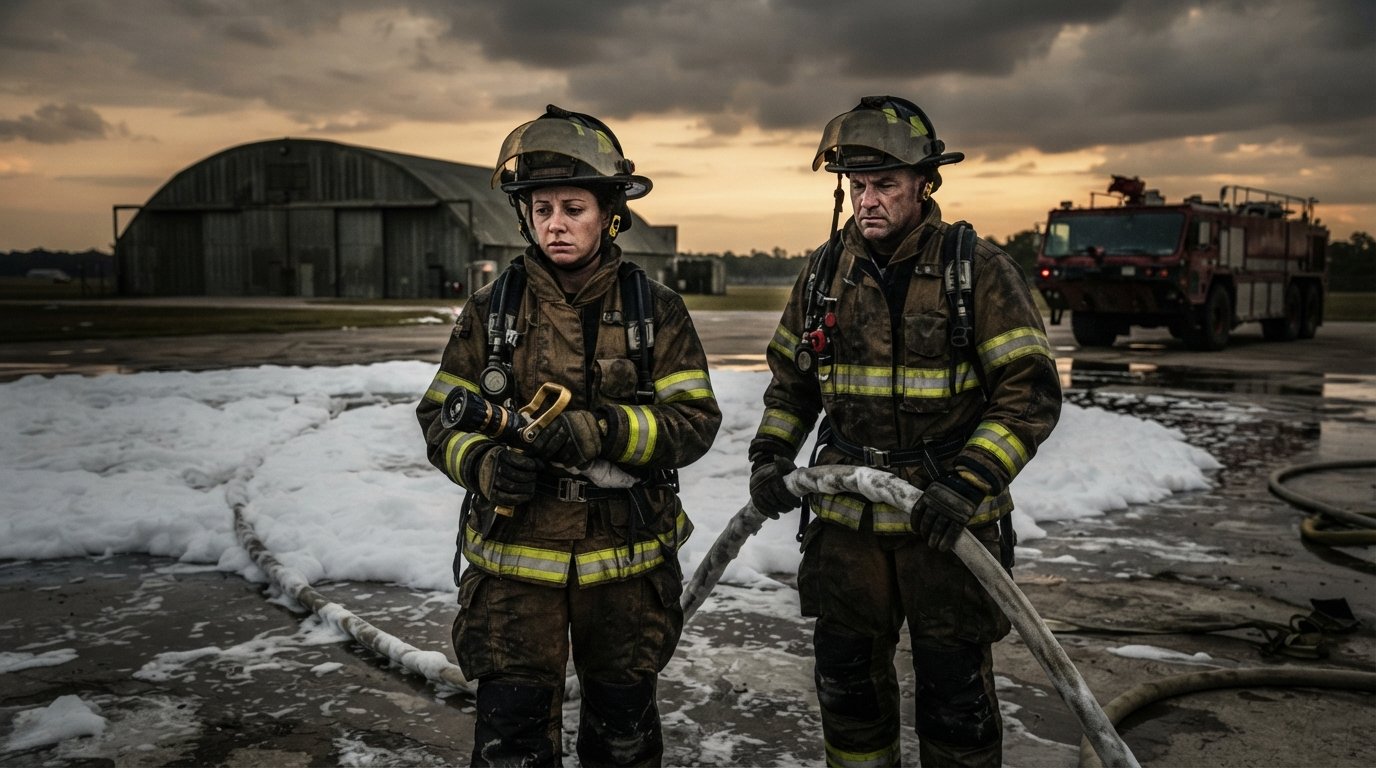
AFFF Firefighter Foam Lawsuit: Eligibility And Claims Process
AFFF firefighter foam lawsuit eligibility and claims process explained. Call 8333494659 for a free case review and to see if you qualify for compensation.

By Cassian Doyle
Firefighters and military personnel who spent years training with aqueous film-forming foam (AFFF) are now facing alarming rates of cancer and other serious illnesses. If you or a loved one were exposed to this firefighting agent, understanding the AFFF firefighter foam lawsuit eligibility and claims process is the first step toward seeking compensation for medical bills, lost wages, and suffering. This guide breaks down who may qualify, what evidence matters, and how to move forward with a mass tort claim in 2026.
What Is AFFF And Why Is It Dangerous?
Aqueous film-forming foam, commonly called AFFF, has been used since the 1960s to extinguish flammable liquid fires. Firefighters, airport rescue crews, and military personnel relied on it during training exercises and emergency responses. The problem lies in two chemicals historically used to make AFFF: perfluorooctanoic acid (PFOA) and perfluorooctane sulfonate (PFOS). These belong to a larger class of substances known as per- and polyfluoroalkyl substances (PFAS).
PFAS are called "forever chemicals" because they do not break down easily in the environment or the human body. Studies have linked prolonged PFAS exposure to kidney cancer, testicular cancer, liver damage, thyroid disease, ulcerative colitis, and other conditions. Firefighters absorb these chemicals through skin contact, inhalation of fumes, and accidental ingestion. Contaminated groundwater near military bases and fire training sites has also affected surrounding communities.
Thousands of lawsuits have been filed against manufacturers like 3M, Chemours, and DuPont. In 2023, 3M agreed to a multi-billion dollar settlement to resolve claims from public water suppliers and individuals. Many individual claims remain pending or continue to be filed, which makes understanding the current AFFF firefighter foam lawsuit eligibility and claims process more important than ever.
Who May Be Eligible To File An AFFF Claim?
Eligibility for an AFFF lawsuit generally depends on two factors: documented exposure to AFFF and a diagnosed health condition linked to PFAS. Not every firefighter or military member qualifies, and not every illness is covered. An experienced attorney can evaluate your specific situation, but the following groups are most likely to have valid claims.
- Career firefighters who used AFFF during training or emergency response
- Military personnel stationed at bases where AFFF was routinely used
- Airport rescue and firefighting crews
- Industrial workers at facilities that stored or used AFFF
- Residents living near contaminated military bases or training sites
On the medical side, qualifying diagnoses typically include kidney cancer, testicular cancer, liver cancer, bladder cancer, pancreatic cancer, prostate cancer, and non-Hodgkin lymphoma. Other conditions such as ulcerative colitis and thyroid disease may also support a claim, depending on the jurisdiction and the strength of the evidence. The key is proving that your exposure was significant and that your illness is scientifically connected to PFAS.
Timing matters as well. Every state has a statute of limitations that sets a deadline for filing. In many mass tort cases, the clock starts when you are diagnosed or when you knew (or should have known) that your illness was linked to AFFF exposure. Missing that deadline can permanently bar your claim, so early evaluation is critical.
The AFFF Firefighter Foam Lawsuit Claims Process Explained
Filing an AFFF claim is not the same as filing a typical personal injury lawsuit. Most AFFF cases are part of a mass tort or multidistrict litigation (MDL), which consolidates similar claims for efficiency. The process involves several stages, and understanding each one helps you set realistic expectations.
Step 1: Free Case Evaluation
The first step is a no-cost, no-obligation case review. During this evaluation, an attorney or intake specialist asks about your firefighting or military history, the products you used, the duration of exposure, and your medical diagnosis. You do not need to have every document ready at this stage. The goal is to determine whether you have a potentially viable claim.
Step 2: Gathering Evidence
If your case moves forward, your legal team will collect supporting documentation. This may include employment records, training logs, military service records, medical records, pathology reports, and proof of AFFF use at your worksite or base. Expert witnesses, such as oncologists and toxicologists, may also be retained to connect your exposure to your illness.
Step 3: Filing The Complaint
Once evidence is assembled, your attorney files a complaint in the appropriate court. In mass tort litigation, your case may be transferred to an MDL, such as the AFFF MDL pending in the District of South Carolina. Being part of an MDL does not mean you lose control of your individual claim; it simply streamlines pre-trial procedures.
Step 4: Discovery And Settlement Negotiations
Discovery is the phase where both sides exchange information, take depositions, and prepare for trial. Many AFFF cases resolve through settlement before reaching a courtroom. Settlement amounts vary widely based on the severity of the illness, the strength of the exposure evidence, and the number of defendants involved.
Step 5: Trial Or Final Resolution
If no fair settlement is offered, your case may proceed to trial. Bellwether trials help both sides gauge the value of similar claims and often drive global settlements. Your attorney will advise you on whether to accept a settlement or continue litigating.
Throughout this process, it helps to work with a legal team that focuses on mass torts and has experience handling PFAS claims. If you are also dealing with other legal issues related to an accident or injury, resources such as CarInjuryAccident can connect you with attorneys who handle personal injury matters and provide additional guidance.
Evidence That Strengthens Your AFFF Claim
Strong AFFF claims share common characteristics: clear proof of exposure and a well-documented medical diagnosis. The more evidence you can provide, the better your chances of a favorable outcome. The following items are especially valuable.
- Military service records showing assignment to bases where AFFF was used
- Fire department employment records and training histories
- Medical records, including pathology reports and imaging studies
- Witness statements from coworkers or fellow service members
- Documentation of water contamination near your home or workplace
Even if you do not have every document, do not assume you are ineligible. Attorneys experienced in AFFF litigation know how to obtain records and build a case from partial information. What matters most is acting quickly while evidence is still available and deadlines have not passed.
Potential Compensation In AFFF Lawsuits
Compensation in AFFF cases can include economic damages, such as medical expenses and lost income, as well as non-economic damages for pain, suffering, and reduced quality of life. In some cases, punitive damages may be pursued if a manufacturer is found to have knowingly concealed the dangers of PFAS. The exact amount depends on factors like the type and stage of cancer, the length and intensity of exposure, and the specific defendants named in your claim.
It is important to understand that mass tort settlements are often structured in tiers. Individuals with more severe injuries and stronger evidence typically receive larger awards. An attorney can explain how similar cases have been valued and what range might apply to your situation. Because every case is unique, no one can guarantee a specific outcome, but a thorough evaluation can give you a realistic picture.
Common Questions About AFFF Lawsuit Eligibility
Many people who contact legal resources have similar questions. They want to know whether they qualify, how long the process takes, and whether they need to pay anything upfront. Most AFFF attorneys work on a contingency fee basis, which means you pay nothing unless you receive compensation. Initial consultations are typically free.
Another common question is whether family members of deceased firefighters can file a claim. In many cases, surviving spouses and children may pursue wrongful death or survival actions on behalf of a loved one whose illness was linked to AFFF exposure. An attorney can explain the specific rules in your state and help you determine the best path forward.
Finally, some people worry that filing a lawsuit will take years and require constant involvement. Mass tort cases can take time, but much of the work is handled by your legal team. Your main responsibilities are providing information, attending medical appointments, and staying in communication with your attorney.
How To Start Your AFFF Claim Today
If you believe you may have been harmed by AFFF exposure, do not wait to explore your options. The AFFF firefighter foam lawsuit eligibility and claims process is designed to help affected individuals seek accountability and compensation, but deadlines and evidence requirements can be unforgiving. Start by gathering basic information about your work history and medical diagnosis, then reach out to a qualified attorney for a free case review.
Platforms like FormsByLawyers can connect you with legal professionals who handle mass tort claims, including AFFF litigation. Through a patented attorney selection process, the platform identifies top-rated attorneys based on peer influence and research, giving you access to skilled representation without upfront costs. A simple case review can clarify whether you qualify and what steps come next.
Taking action now protects your rights and preserves your chance to recover compensation for you and your family. Whether you are a retired firefighter, an active duty service member, or a concerned family member, the path to justice begins with a single conversation.